Agent day
Check in, open Sales or Service, see attendance, return to recent work.
CrystalBio is now used by the team for daily sales, service, attendance, leave, and admin visibility. The work was about making that live field workflow simple enough to hold up in real use.
Instead of explaining every screen in paragraphs, this is the simple shape of the product.
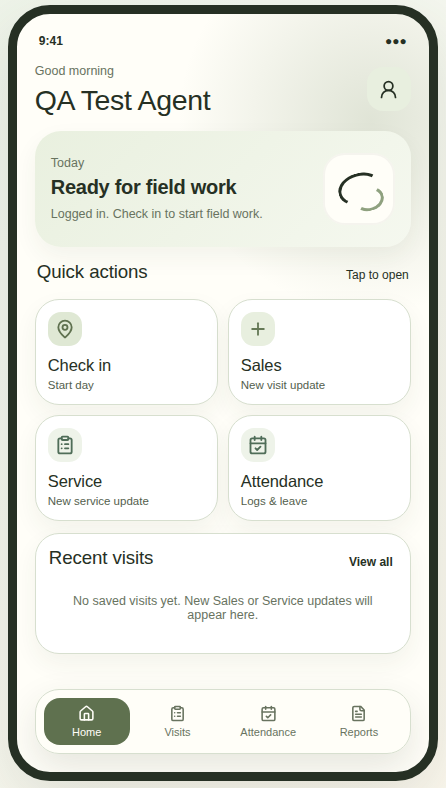
Check in, open Sales or Service, see attendance, return to recent work.
Save the real visit first. Add customer, equipment, quote, proof, and notes later.
See attendance, leave, agent profiles, entries, reports, and follow-ups.
Real usage, check-in state, reports, backups, and visible failure points.
This is the product logic I kept coming back to while shaping the experience.
Login, check in, location captured.
Sales or Service Step 1 records the real field action.
Customer, equipment, quote, proof, and office notes.
Attendance, leave, follow-ups, reports, and person-wise activity.
Check-in state, reports, backups, access, and reliability checks.
These are the choices that made the product calmer, safer, and easier to hand over.
Daily actions stay visible: Check in, Sales, Service, Leave, My entries, Attendance, Reports.
Quick capture first. Details later, without losing the visit.
Overview, approvals, agents, profiles, and reports each get one clear purpose.
Once people use it daily, state persistence, reports, access, backups, and clear failures affect trust.
Agents helped move fast, but logic, UX, hallucinations, and edge cases still needed review.
Storage, monitoring, backups, safer data paths, and hidden debug views came up early.
The carousel keeps one consistent mockup height and removes the repetitive second visit form.
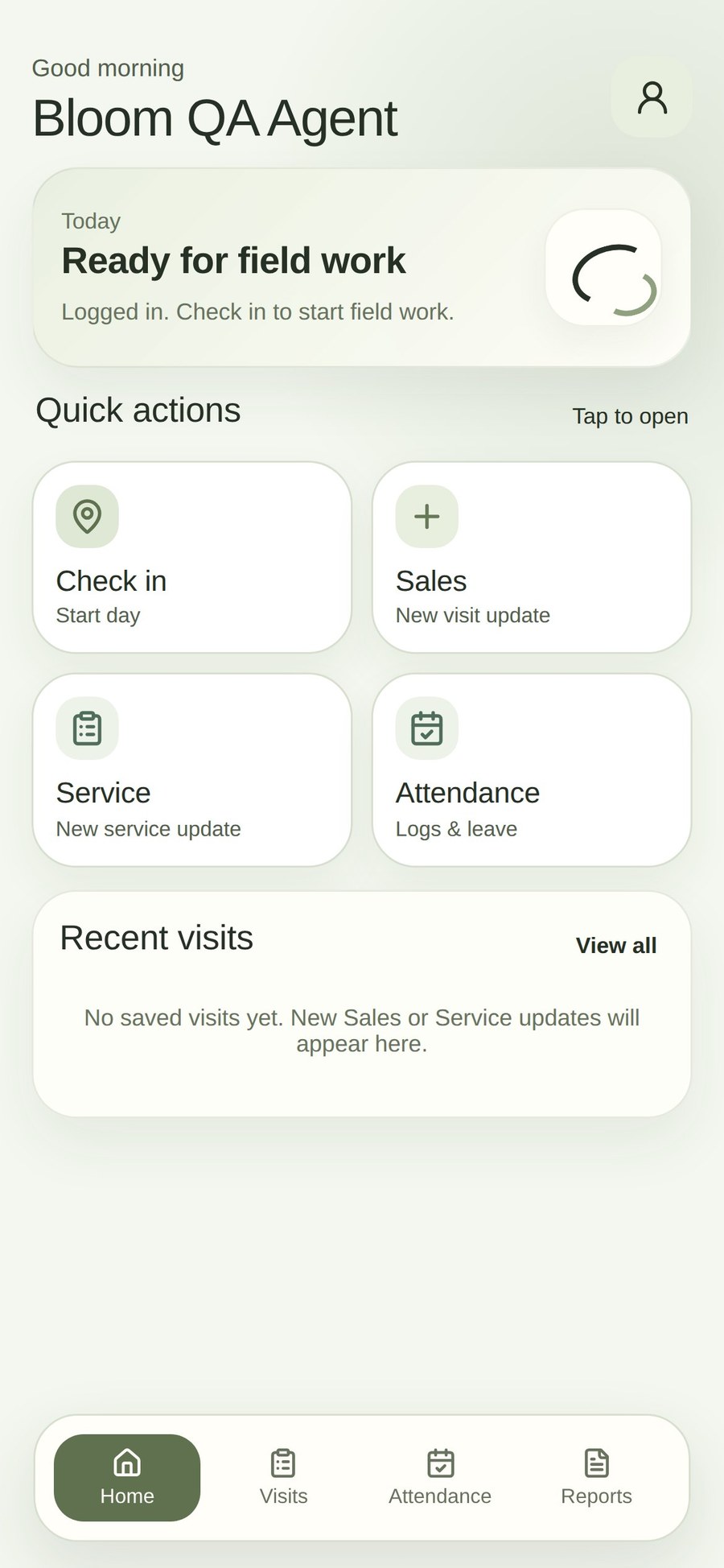
Agent homeQuick actions make the field loop visible immediately.
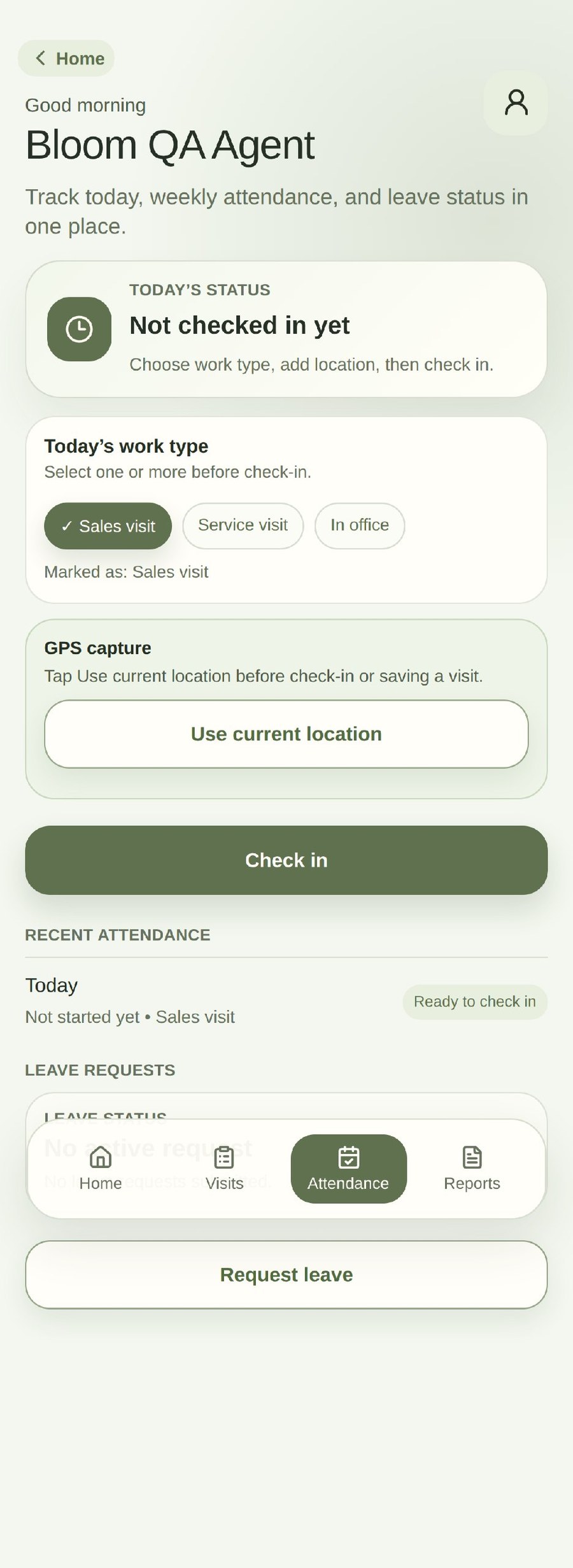
AttendanceWork type, location capture, check-in, history, and leave request stay in one place.
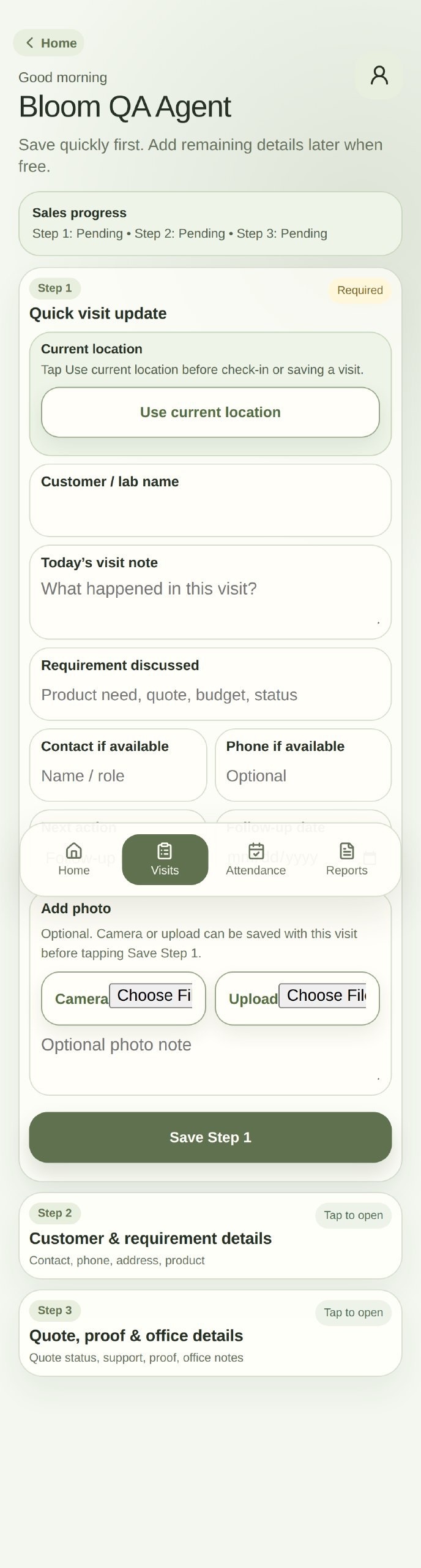
Visit updateOne representative visit form is enough; service follows the same interaction pattern.
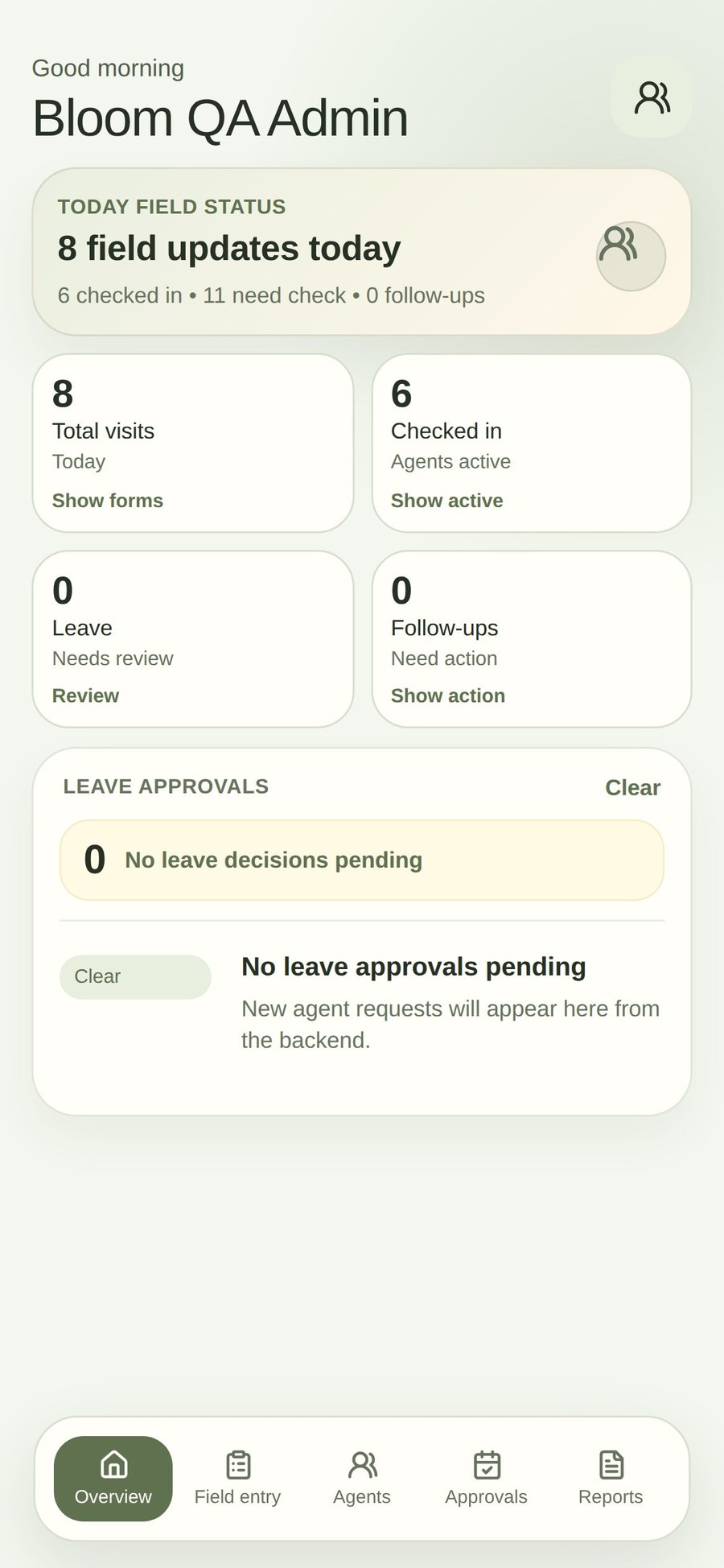
Admin overviewAdmin sees visits, active agents, leave, follow-ups, and review status.
A working internal product is not just a good-looking UI. It has to survive real check-ins, return visits to the app, admin review, and daily trust.
CrystalBio is strong because it shows product sense under real-world mess: field users, admin needs, live usage, one known check-in persistence issue, and AI-assisted building.